







🎧 Prefer to Listen? I turned this article into an audio deep-dive perfect for your commute.
The Executive Triage Summary
The Crisis: Most service businesses are hemorrhaging six figures in profit by chasing “Super Bowl” reach instead of “OR-level” conversion precision.
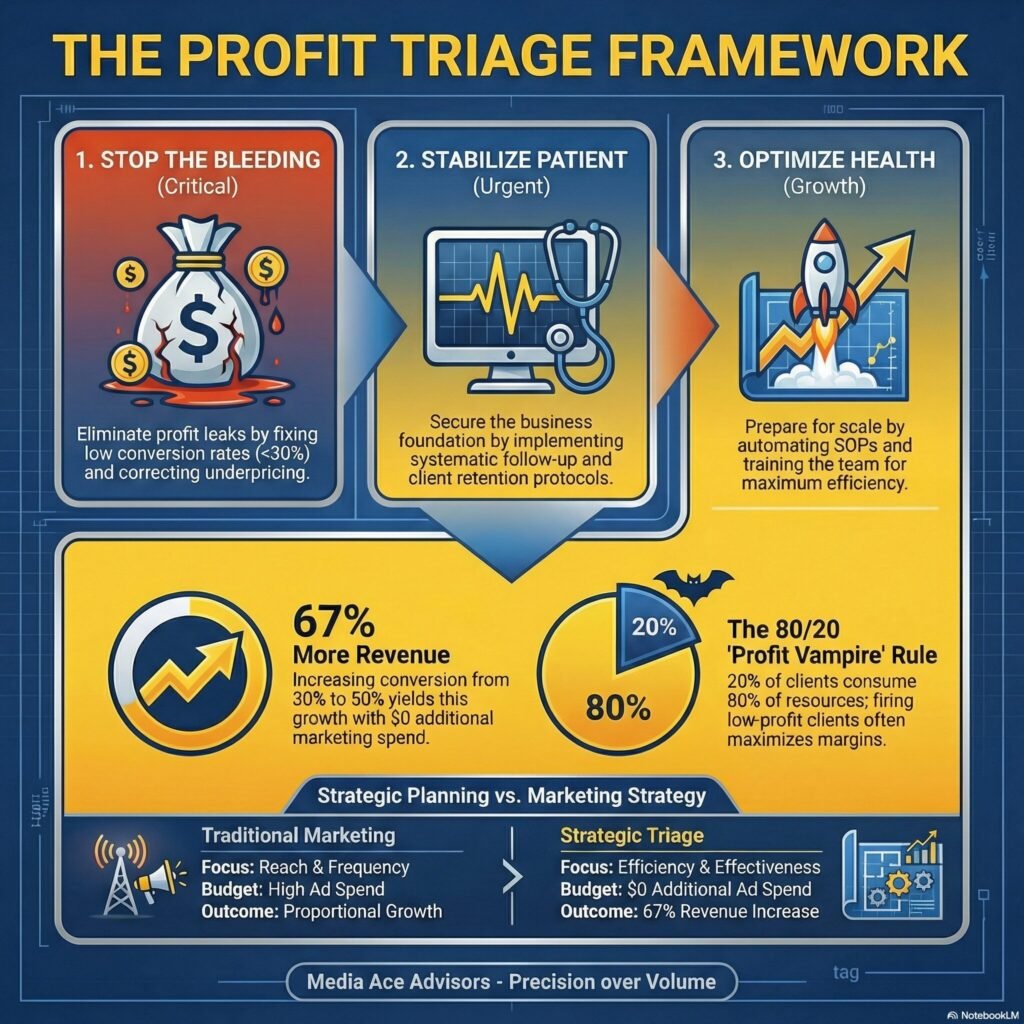
The Math: Increasing your conversion rate from 30% to 50% yields 67% more revenue with $0 additional marketing spend.
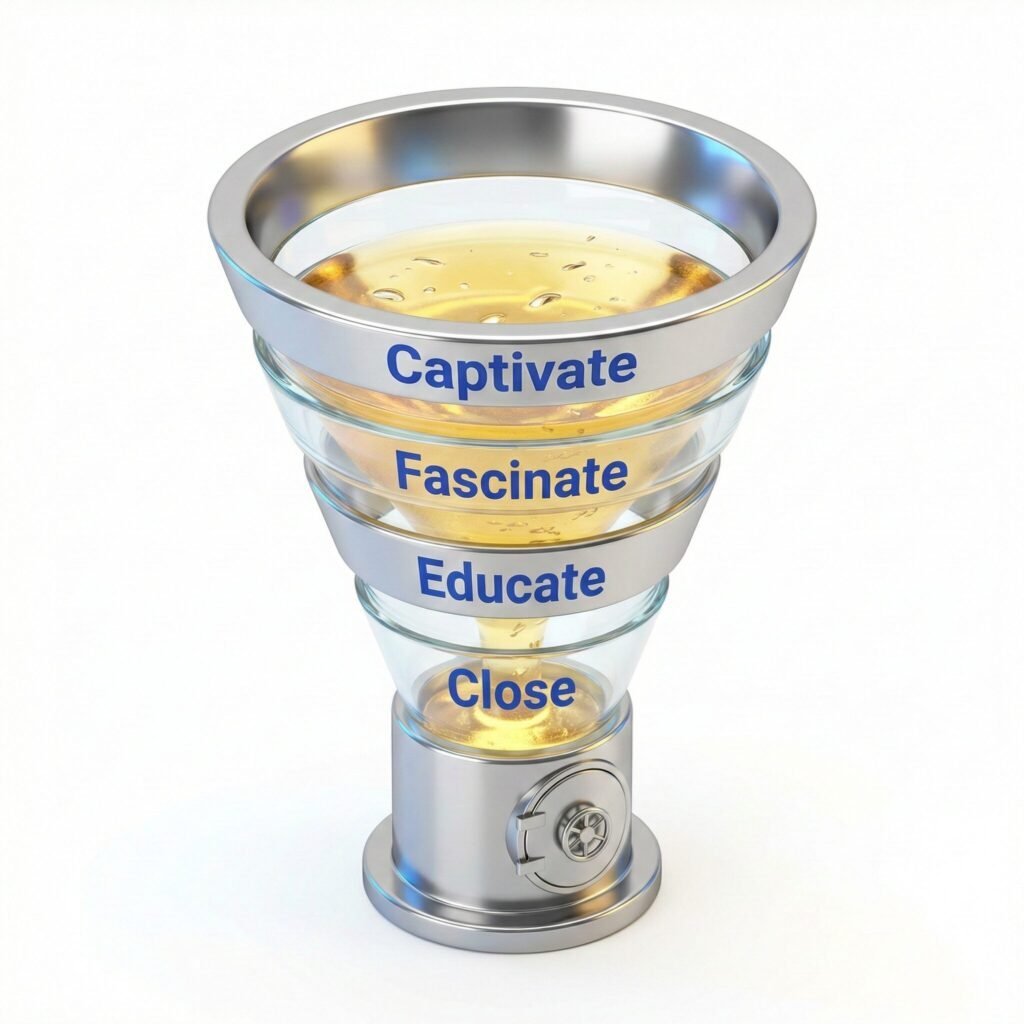
The Protocol: High profit margins require the 4-Step Conversion Formula: Captivate, Fascinate, Educate, and Close.
The 80/20 Rule: 20% of your clients are likely “Profit Vampires.” Firing them is often the fastest path to a 30%+ profit margin.The Treatment: If nothing changes, nothing changes. Stop the bleeding with a Strategic Planning protocol.
Last Sunday, millions watched the Super Bowl. Brands spent $7 million for 30 seconds of airtime. They hoped their clever ads would go viral. Meanwhile, service businesses across America are hemorrhaging six figures annually in profit they can’t even see.
As a business coach with a background in ICU and OR nursing, I can tell you this: most businesses don’t need more marketing strategy. They need triage. They need someone to stop the bleeding.
The False Belief That’s Killing Your Profit Margins
Here’s what’s destroying small business profit margins in 2026. Every business owner tells me the same thing: “We need more leads. More customers. More reach.” They’re hypnotized by Super Bowl mentality where reach equals revenue and frequency equals results.
So when I tell them I can help them find $100,000 or more in hidden profit without spending another dime on marketing, they look at me like I’m crazy. They literally can’t comprehend it. Because they’ve been conditioned to believe that growth requires advertising spend.
That’s like an ICU nurse being told the patient doesn’t need stabilization, they just need more visitors. When you’re bleeding out, you don’t need reach. You need precision intervention.
The 2026 Economic Pressure Point
Right now, economic uncertainty is everywhere. But there’s a specific 2026 pressure point making things worse: AI-driven advertising costs are skyrocketing. Platforms are using AI to optimize ad placement, which sounds great until you realize they’re also using AI to maximize what they charge you. The same ad that cost $2 per click last year now costs $3.50. The same reach that delivered 10,000 impressions now delivers 6,000.
Business owners are getting squeezed from both sides. Rising ad costs meet falling consumer attention spans. According to a recent study on digital advertising effectiveness, ad fatigue and banner blindness have reduced click-through rates by 40% since 2024 while costs have increased 75%.
And when I ask them what their plan is, they say “We’ll just spend more on marketing.” That’s not strategic planning. That’s financial suicide.
Meanwhile, their business continues hemorrhaging profit while they wait for perfect conditions that will never come. They tell themselves “I can’t invest in strategic planning until things stabilize” or “I can’t afford a business coach during uncertain times.”
If nothing changes, nothing changes. But here’s what I learned in healthcare: crises separate the great from the average. While everyone else is frozen in fear, the businesses that apply strategic planning instead of panic will capture market share they’ll never give back.
The Real Problem: You’re Optimizing for the Wrong Thing
Your problem isn’t your marketing strategy. It’s that you’re focused on reach and frequency (how many people see your message, how often) when you should be focused on efficiency and effectiveness (how many people who see your message actually buy, and at what profit margins).
That’s not marketing strategy. That’s strategic planning. And that’s where businesses stop hemorrhaging and start healing.
What if your real problem isn’t in your marketing strategy at all? What if it’s in your systematic approach to converting the leads you already have?
The Triage Assessment: Strategic Thinking vs. Tactical Spending
Super Bowl ads are tactical marketing strategy. They create awareness, generate reach, and hope something sticks. That’s not strategic planning. That’s expensive guessing.
In healthcare terms, that’s ordering every test available and hoping you find the problem. It’s wasteful, expensive, and often misses the actual diagnosis.
As a business coach who spent years in ICU and OR environments, here’s what I know: precision beats volume every time. When a patient is crashing, you don’t need more nurses. You need the right intervention in the right sequence.
When a business is hemorrhaging profit margins, you don’t need more leads. You need strategic planning around conversion efficiency.
The Math That Changes Everything
Let me show you the triage assessment math that makes Super Bowl marketing strategy irrelevant for service businesses.
Scenario A: Traditional Marketing Strategy
100 leads per month × 30% conversion = 30 clients
To double revenue: Need 200 leads (double marketing spend)
Result: More reach, more cost, proportional growth
Scenario B: Strategic Planning Approach
100 leads per month × 50% conversion = 50 clients
To improve revenue: Fix conversion rate (zero additional marketing spend)
Result: 67% more revenue, same marketing budget, pure profit margin improvement
Here’s the formal equation:
$$\text{Found Profit} = (\text{Revenue} \times \text{Improved Conversion %}) – \text{Marketing Spend}$$
When you increase conversion percentage without increasing marketing spend, you create what I call a “Profit Surge.” It’s the business equivalent of successfully resuscitating a patient. It’s mathematically superior to traditional advertising and it’s rooted in strategic planning, not tactical spending.
The Triage Framework: What to Fix First
In the ICU, we use triage to determine which patient needs immediate intervention. In business coaching focused on profit margins, you need the same discipline. Not all profit leaks are equally urgent.
Critical (ICU-level intervention): Conversion rate below 30%, profit margins under 10%, owner working 70+ hours weekly
Urgent (Stabilization needed): No follow-up system, no pricing strategy, no client retention plan
Important (Preventive care): Lack of SOPs, no team training, manual processes that should be automated
Most businesses try to fix everything at once. That’s not strategic planning. That’s panic. Strategic planning means: stop the bleeding first, stabilize the patient second, optimize for long-term health third.
This is where understanding how to improve profit margins becomes systematic. I teach a four-step diagnostic protocol that works whether you’re talking to someone in person, on the phone, on your website, or through email. I call it the Conversion Formula, and it’s the business equivalent of a pre-op checklist.
Miss one step, and the whole procedure fails.
The 4-Step Conversion Formula (OR-Level Precision)

Super Bowl ads master the first step of conversion and completely fail at the other three. They grab attention with celebrities and humor. Then they show a logo and hope you remember it later.
There’s no systematic approach. No precision sequencing. No measurable outcome. It’s awareness theater, not strategic planning.
In the OR, we have pre-op checklists for a reason. Miss one step, and patients die. In business, miss one conversion step, and profit margins die. This is why strategic planning around systematic conversion beats marketing strategy around expensive reach every single time.
STEP 1: CAPTIVATE – Attention Without Action is Just Noise
Super Bowl advertisers nail this step. They captivate for 30 seconds using A-list celebrities, humor, shock value. You remember the Budweiser Clydesdales, the Doritos commercial, the funny car ad.
But do you remember what they were selling? More importantly, did you buy anything?
That’s reach without revenue. Frequency without profit margins. In healthcare terms, that’s getting the patient to show up but never diagnosing or treating them. Marketing strategy without strategic planning.
For service businesses using strategic planning to improve profit margins, captivating doesn’t require $7 million or celebrity endorsements. It requires addressing your prospect’s most urgent problem in a way that makes them stop and pay attention.
Most service businesses completely waste this moment. They lead with “We’ve been in business for 20 years” or “Quality service you can trust.” That’s about you.
Meanwhile, your prospect is thinking “I’m working 70 hours a week and taking home less than my employees” or “I’m one bad month away from missing payroll.”
Strategic Planning Lesson: In the ICU, the first assessment question isn’t “How long have you been a hospital?” It’s “Where does it hurt most?” That’s captivate. Speak directly to their pain point with precision. Not your credentials. Not your history. Their crisis.
Super Bowl ads get attention right but miss the diagnosis entirely.
STEP 2: FASCINATE – The Diagnosis They Desperately Need
After captivating with a funny commercial, Super Bowl marketing strategy shows a logo. Maybe a tagline. Zero fascination. Zero diagnosis.
Because fascination in strategic planning terms means showing a clear solution to the problem you just identified. It means your unique diagnostic capability.
Most service businesses focused on tactical marketing strategy fail here too. After capturing attention with the prospect’s problem, they jump to “Here’s what we do” without explaining why that matters or how it’s different from every other option.
Generic language like “comprehensive solutions” or “industry-leading service” doesn’t improve profit margins. It’s noise without diagnosis.
Strategic Planning Solution: Fascination is where you show that you’ve diagnosed their specific condition, not a generic illness. This is your sub-headline, your unique positioning, the reason they should keep listening.
For the accounting firm: “Strategic tax planning saves our clients an average of $47,000 annually”
For the restoration company: “Back to normal within 48 hours, guaranteed”
For the business coach focused on profit margins: “Find $100K+ in hidden profit without spending another dollar on marketing”
Specific. Quantified. Different. That’s strategic planning for conversion.
Strategic Planning Lesson: In the OR, after diagnosis comes the treatment plan. You don’t start cutting until everyone in the room knows exactly what you’re doing and why. Fascinate is the “here’s what we’re going to do and why it’s going to work” moment.
Super Bowl ads skip this entirely because they’re focused on brand awareness (marketing strategy), not conversion precision (strategic planning).
STEP 3: EDUCATE – The Treatment Protocol That Stops the Bleeding
Here’s where Super Bowl marketing strategy completely implodes for service businesses trying to improve profit margins. After captivating with humor and maybe fascinating with a tagline, there’s zero education. No protocol. No systematic approach.
The ad ends. The viewer thinks “That was funny” but has no idea what makes that brand different or worth choosing.
That’s because Super Bowl ads aren’t about strategic planning for conversions. They’re about reach and frequency for brand awareness.
In healthcare terms, that’s getting the patient to laugh at your joke but never explaining the treatment protocol. They leave confused and scared.
This is the step that changes everything for small business profitability and profit margins. Education is where you explain your systematic approach (the treatment protocol) and why it works. It’s where you build trust. It’s where you shift from “interesting option” to “obvious choice.”
And it’s where most service businesses are leaving six figures on the table annually because they skip this step entirely. They diagnose the problem (Captivate), hint at a solution (Fascinate), then immediately jump to price without ever explaining the treatment protocol.
The Case Study: Dr. Jennifer’s Chiropractic Practice (Full Patient Chart)
INITIAL ASSESSMENT (Chief Complaint):
Dr. Jennifer Walsh, 43 years old
Chiropractic practice, 9 years in business
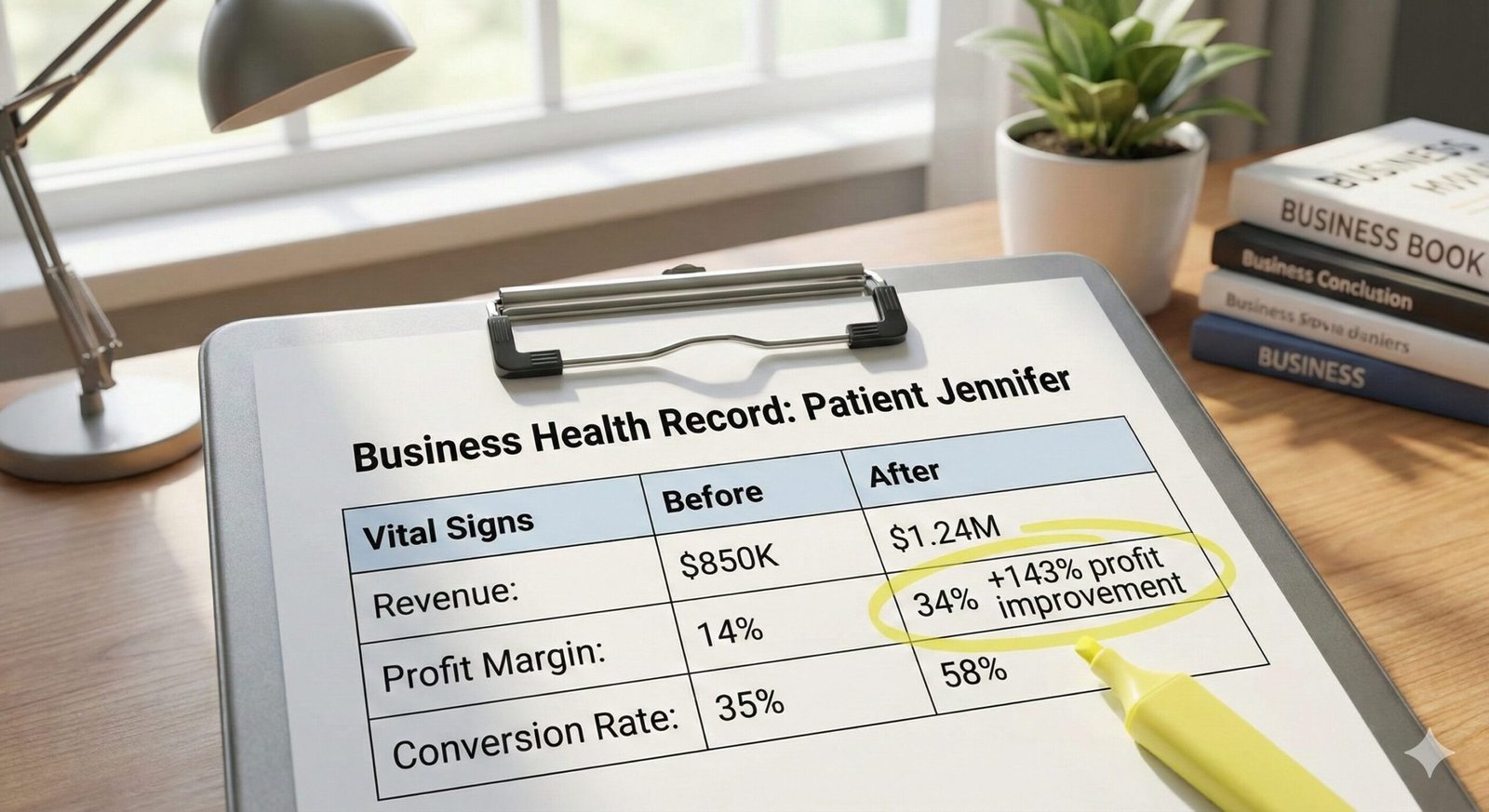
Revenue: $850K annually
Profit Margins: 14%
Working: 70+ hours per week
Chief Complaint: “I’m working harder than ever but taking home less than my associate doctors”
VITAL SIGNS (Business Metrics):
- New Patient Conversion: 35% (should be 60%+)
- Existing Patient Retention: 68% (should be 85%+)
- Average Transaction: $85 per visit (underpriced by 15-20%)
- Treatment Plan Acceptance: 45% (should be 70%+)
DIAGNOSIS: Acute profit hemorrhaging due to broken conversion systems and underpricing
TREATMENT PROTOCOL (Strategic Planning Intervention):
Treatment 1: Fix New Patient Conversion (Educate Step Missing)
Problem: Phone staff quoted price immediately without educating on value
Solution: Implemented education script explaining comprehensive care model
Result: Conversion improved from 35% to 58% in 60 days
Treatment 2: Implement Retention Protocol (No Follow-Up System)
Problem: No systematic follow-up after treatment plans ended
Solution: 90-day check-in protocol, reactivation campaign for dormant patients
Result: Retention improved from 68% to 82% in 90 days
Treatment 3: Price Optimization (15% Undercharging)
Problem: Prices hadn’t increased in 3 years, 15% below market rate
Solution: Strategic 12% price increase for new patients, 8% for existing (see The Psychology of Pricing for the full audit process)
Result: No patient loss, gross margin improved 4.2 percentage points
OUTCOME (Post-Treatment):
Revenue: $1.24M annually (+46%)
Profit Margins: 34% (+143% improvement)
Working: 45 hours per week (25-hour reduction)
Take-Home Income: $420K (previously $119K)
This is strategic planning with OR-level precision. Every intervention measured. Every outcome documented. No guessing. No Super Bowl-style hope marketing. Just systematic diagnosis and treatment.
Why Education Matters for Profit Margins
Here’s the mathematical reality: prospects can’t tell the difference between you and someone half as good unless you teach them how to evaluate options. When you become the authority who educates (the business coach who explains the treatment protocol) instead of the vendor who quotes, everything changes.
You’re not competing on price. You’re not one of three options they’re shopping. You’re the trusted advisor (like their doctor) who helped them understand their condition, and now they want you specifically to implement the solution.
This is how I can confidently tell you there’s six figures of hidden profit in your service business. Most businesses are converting 30-40% of leads when they should be converting 60-70%. That gap is pure profit margin improvement caused by skipping the education step.
You’re not giving prospects enough information to make an informed decision, so they make no decision or default to the cheapest option.
The 80/20 Rule in Strategic Planning
Here’s where the 80/20 rule becomes critical to strategic planning. I learned in ICU that 20% of patients consume 80% of resources. In business, 20% of clients consume 80% of your time while generating less than 20% of your profit margins.
The Uncomfortable Truth: Some clients are killing your profitability. They demand constant attention, challenge every invoice, pay slowly, and refer nobody. In healthcare, we call these “non-compliant patients.” In business coaching, I call them “profit vampires.”
Strategic Planning Decision: Fire the bottom 20% of clients. Use that reclaimed time to better serve the top 80% who actually appreciate your expertise and pay on time.
That’s strategic planning. Most businesses won’t do it because it feels like “losing revenue.” But it’s actually increasing profit margins by removing resource drain.
Dr. Jennifer fired 7 patients (bottom 15% by profitability). Lost $23K in revenue. Gained 12 hours per week. Used that time to implement better conversion systems. Net result: +$390K in annual profit.
That’s the 80/20 rule in action through strategic planning, not marketing strategy.
STEP 4: CLOSE – The Treatment Acceptance Protocol
Super Bowl ads end with a logo. Maybe a website. No clear next step. No call to action. No reason to schedule the treatment now instead of later.
It’s passive brand building (marketing strategy), not active patient acquisition (strategic planning).
In healthcare, imagine if after explaining a life-saving surgery, the surgeon just showed you the hospital logo and walked away. No scheduling. No consent forms. No next steps. That’s what Super Bowl marketing strategy does.
Strategic Planning Solution: The close in strategic planning around conversions is where you make accepting treatment irresistible. Free diagnostic assessment. No-obligation consultation. Risk-reversal guarantee. Payment plans.
Something that removes friction and makes saying yes easier than saying no.
This isn’t manipulation. It’s removing barriers between someone who needs help and someone who can provide that help. As a business coach focused on profit margins, I see this constantly: businesses educate perfectly (explain the treatment protocol) but then make the next step confusing or risky.
They get the patient 80% ready for treatment, then lose them at the consent form.
The Economic Uncertainty Advantage: Here’s where economic uncertainty becomes your strategic planning advantage. When prospects are scared to invest (scared of “surgery”), the businesses that win remove all risk from the decision.
Make it easy to start. Make it safe to try. Make it obvious what happens next.
Strategic Planning Lesson: Super Bowl marketing strategy ends with “Remember our brand.” Strategic planning focused on profit margins ends with “Here’s your no-risk first step.”
One builds awareness. One builds revenue.
The Comparison: Super Bowl vs. Strategic Planning
| Element | Super Bowl Marketing Strategy | Strategic Planning for Service Business |
| Focus | Reach & Frequency | Efficiency & Effectiveness |
| Goal | Brand Awareness (Hope) | Revenue Conversion (Precision) |
| Investment | $7M for 30 seconds | $0 in ad spend, systematic optimization |
| Measurement | Impressions & Views | Conversion Rate & Profit Margins |
| Approach | Entertain & Hope | Diagnose & Treat (Protocol) |
| Result | People remember the ad | People become paying clients |
| Typical Outcome | Unmeasurable ROI | 40-67% revenue increase, same lead volume |
Strategic Planning Math:
- Traditional Approach: 100 leads × 30% conversion = 30 clients
- Strategic Planning: 100 leads × 50% conversion = 50 clients
- Found Profit: 67% more revenue, $0 additional marketing spend
Is Your Business in the ICU? (Self-Diagnostic Checklist)
Before we go further, let me give you a triage tool. Answer these five questions honestly:
1. Conversion Crisis: Are you converting less than 40% of qualified leads into paying clients?
2. Profit Hemorrhaging: Are your profit margins below 15% even though revenue is growing?
3. Time Toxicity: Are you working 60+ hours per week while taking home less than you should?
4. System Failure: Do you lack documented processes for sales, delivery, and follow-up?
5. Price Paralysis: Have your prices stayed the same for 2+ years despite rising costs?
Your Triage Score:
- 0-1 Yes: You’re stable. Focus on preventive care (optimization).
- 2-3 Yes: You’re urgent. You need stabilization (systematic fixes).
- 4-5 Yes: You’re critical. You need ICU-level intervention immediately.
If you scored 2 or higher, your business is hemorrhaging profit right now. Every day you wait is another day of financial bleeding. That’s not fear-mongering. That’s clinical assessment.
The Two Paths Forward
You’re reading this the week after Super Bowl Sunday while everyone else was watching $7 million commercials and debating marketing strategy. That tells me everything I need to know about you.
You’re not following the herd. You’re looking for precision over volume. Strategic planning over tactical spending. You understand that improving profit margins isn’t about outspending your competition. It’s about out-thinking them.
You get that reach without conversion is just expensive noise. You understand the difference between efficiency and effectiveness in business.
The ICU-Level Reality
Here’s the reality: the next 12 months will separate service businesses into two categories.
Category 1: The Hemorrhaging
These businesses will keep doing what they’ve always done. Chasing more leads. Spending more on marketing strategy. Working more hours. Hoping something changes while economic uncertainty paralyzes them into inaction.
Their profit margins will continue bleeding while they wait for “perfect conditions” that never come. In 18 months, 30-40% of these businesses will close or be forced into desperate measures.
Category 2: The Strategic
These businesses will focus on strategic planning. They’ll optimize what they already have. They’ll fix their conversion rates using systematic protocols. They’ll implement the 80/20 rule and fire unprofitable clients.
They’ll find the six figures already sitting in their pipeline and stop the profit hemorrhaging. While everyone else is frozen, they’ll capture market share they’ll never give back.
If nothing changes, nothing changes. But here’s what I learned in healthcare during crises: uncertainty separates the great from the average. The businesses that act with strategic planning (not panic) during chaos will dominate their markets for the next decade.
Your Free Diagnostic Assessment (Book Interview)
I’m currently conducting research interviews for the second edition of Profit Foundation: The 7-Step Pathway to Profit (my first book on strategic planning for service businesses). These aren’t sales calls. I’m genuinely researching how service businesses are navigating 2026’s economic uncertainty and finding ways to improve profit margins without increased marketing spend.
During these 45-minute diagnostic assessments, I’ll walk through your conversion process exactly like I would assess a patient in the ICU: systematically, thoroughly, looking for where you’re hemorrhaging profit.
You’ll leave with:
- Specific metrics on your current conversion efficiency
- Identified profit leaks (typically 3-5 major ones)
- Triage recommendations (what to fix first)
- Estimated dollar value of found profit (usually $50K-$150K+)
- A clear picture of what strategic planning could do for your profit margins
If you’d like to be interviewed and receive a complimentary copy of the second edition when it publishes, schedule your diagnostic assessment here.
There’s no cost. No obligation. No pitch. Just a strategic planning conversation about where your business is hemorrhaging profit and how to stop it using the same systematic, evidence-based approach I learned in healthcare.
Or, you can keep watching Super Bowl ads and hoping more marketing will somehow solve your profit margin problem. But you and I both know better.
The businesses that win don’t have bigger advertising budgets. They have better strategic planning. They have ICU-level triage skills. They have OR-level precision.
The question is: which business will yours be?
Frequently Asked Questions
What is the 80/20 rule in business?
The 80/20 rule in business states that 80% of your profit typically comes from 20% of your clients. Strategic planning involves identifying and focusing resources on that top 20% while reconsidering relationships with the bottom 20% who consume resources but deliver minimal profit margins.
How do you improve gross margin without raising prices?
Improve gross margin through strategic planning focused on conversion efficiency: increase your lead-to-client conversion rate from 30% to 50%+, implement systematic follow-up protocols to improve retention, and apply the 80/20 rule to eliminate low-profit clients who drain resources. You can also look at bundling strategies to increase transaction size.
What is strategic planning vs. marketing strategy?
Marketing strategy focuses on reach and frequency (how many people see your message). Strategic planning focuses on efficiency and effectiveness (how many people convert and at what profit margins). Marketing requires larger budgets; strategic planning requires better systems.
What is the average cost of a business coach?
Business coach fees typically range from $500 to $5,000+ per month depending on experience and scope. However, the ROI calculation matters more than cost. A business coach focused on profit margins should help you find 10-20x their fee in hidden profit within 90 days through strategic planning and conversion optimization.
About the Author:
I’m Ryan Herrst with Media Ace Advisors. I help service business owners (annual revenue $250K-$5M, 10 or fewer employees) identify hidden profit opportunities and create clear pathways to growth. My background in ICU and OR nursing taught me systematic assessment, precision intervention, and the importance of getting the diagnosis right before starting treatment. I apply that same methodology to business coaching, focusing on strategic planning that improves profit margins without requiring additional marketing spend. Learn more about the 7-lever framework or discover why busy businesses stay broke.
One Response